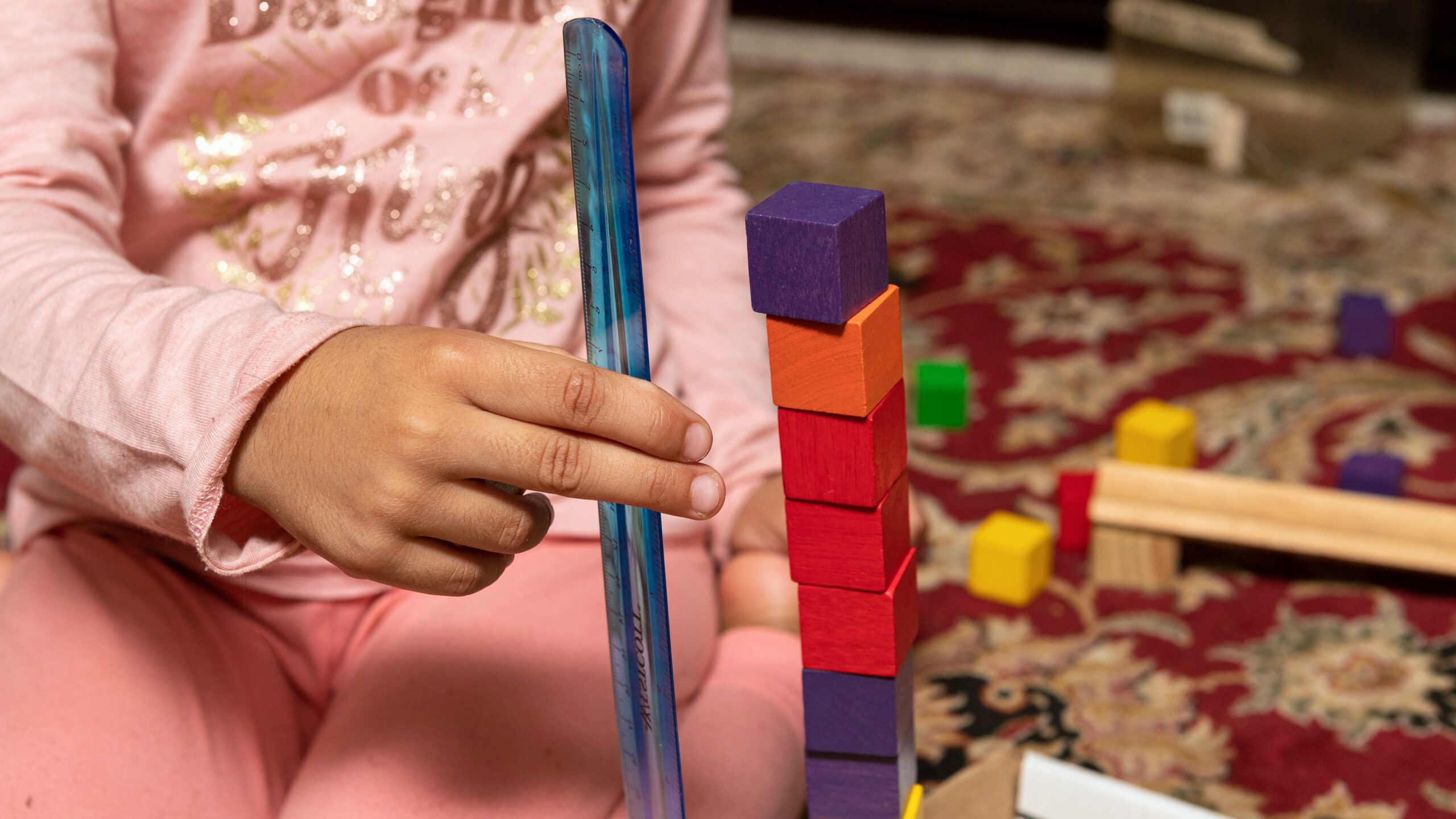
The world should be a place of wonderment and satisfaction for young students as they explore, investigate, discover, and solve problems that are meaningful to them. Young children have a natural curiosity and motivation to understand the world as budding scientists and engineers; however, more work needs to be done to understand and support preschool […]
This symposium at SREE 2025 examines new approaches to assessing how young children learn science and engineering in the early grades. Presenters will share a landscape analysis of existing assessments and introduce innovative tools, including computer-adaptive tests, game-based performance tasks, and measures of computational thinking. Together, these studies highlight both the promise and the challenges […]
In this webinar, the Lawrence Hall of Science and CAESART explored how science teaching and learning in elementary classrooms can be a powerful lever for improving student learning across subjects. In this interactive session, participants: Reflected on their own experiences and identify common barriers to making time for science in elementary classrooms. Engaged in integrated […]
NSTA Annual Conference
Minneapolis, MN, United States
Naomi Hupert presented a poster session, “Creating High-Quality Science Instruction and Assessment for All Early Elementary Learners,” at the National Science Teachers Association (NSTA) conference in Anaheim, CA. The session spotlighted the national Center to Advance Elementary Science through Assessment, Research, and Technology (CAESART) and a research opportunity. Interested in learning more or participating in […]
Computational thinking is increasingly recognized as foundational to science learning — but finding validated tools to measure it in early grades is harder than it should be. It's one of the topics our webinar speakers were uniquely positioned to address. On Wednesday, July 29, Dr. Bill Penuel moderated a webinar with Drs. Megan Silander, Sania […]